With the onset of Botox and hormone injections, Margreet Voermans investigates whether animal beauty contests reflect a societal obsession with perfection.
In 2021, shock permeated the camel trade when more than 40 camels were disqualified from `Saudi Arabia’s largest beauty contest, The King Abdulaziz Camel Festival, as a result of botox injections. But beneath the viral camel news, a more profound and uncomfortable truth lies. The manipulation of animal beauty is a global phenomenon that affects many species, including humans. From my perspective as a veterinary specialist, it is a reflection of how humans transform themselves and the animals they manage.
In the cool, sterile exam rooms of Saudi’s Salam Veterinary Hospital, high-tech imaging machines scan the heads of these desert royalty creatures. Camels are worth hundreds of thousands or even millions of dollars. These are not routine checks like in other veterinary hospitals, but part of detecting cosmetic surgery. Botox, silicones, subcutaneous air infiltration, and hormone injections to enhance beauty.
The story of the exclusion of beauty camels in 2021 because of Botox went viral and was judged by Western media as bizarre, comical and criminal. Camel botox, an animal used in livestock. They didn’t realise that what happened in the desert is part of a much larger global pattern. The cosmetic enhancement in animals is a reflection of our ideas of beauty, performance and value.
Beauty in the age of biotechnology
To understand how we got to this situation, we must first ask: Why do camels need to be beautiful?
In Saudi Arabia and other Gulf states, camel pageantry is a centuries-old tradition. Once companions to Bedouins to survive in the desert, they became cultural symbols of pride, heritage and prestige. In beauty competitions, judges assess camels for long necks, dropped underlips, full lips, curved upper nose, shape of the ears and hump and the overall posture. These beauty competitions are not only a source of pride, but also offer substantial financial rewards and prestige to the winners, with cash prizes reaching 10 million Saudi Riyals (SR), totalling 120 million SR for the prize winners overall. The camel becomes expensive for sales or breeding purposes.
Where prestige meets profit, enhancement soon follows.
Cosmetic work on camels didn’t appear out of the blue. It mirrors human society, and especially our obsession with aesthetics. These cases are not exceptional or isolated, but part of the same mindset that leads people to inject their faces, reshape their pets, or transform their show horses.
Cosmetic intervention in animals has become increasingly common and controversial. In Colombia, Paso Fino horses are not allowed to compete with one testicle, so silicones are placed in the scrotum. In South Korea, dogs have undergone eyelid surgery and orthodontics. In the Western world, dogs undergo ear cropping and tail docking, despite bans on these practices.
Camel enhancements, in this context, are not anomalies. They are adaptations of human behaviour projected on other species.
Botox, hormones, and the science of detection
There is a range of interventions seen in camels:
Botulinum toxin (Botox): to relax facial muscles and enhance the droop of the underlip.
Silicone injections or implants: to alter the shape and firmness of lips and forehead.
Air inflation in the throat area: To improve the shape and have a more elevated head position.
Mental nerve blocks: to have a more dropped underlip. Hormones: growth hormones or anabolic steroids to improve body shape.
Some procedures are medically dangerous. The body can reject silicone injections or implants as an abnormal substance. Air inflation can lead to infection and tissue damage.
“With tools like thermal imaging, ultrasound, radiology, electromyography and CT scans, Salam Camel Hospital is leading a new era of fairness and transparency in camel beauty enhancement detection”
To combat such practices, camel federations have invested in advanced veterinary diagnostics. Salam Veterinary Group is the first veterinary research and treatment company of its kind in the Kingdom of Saudi Arabia and the largest in the world. Opened on July 5, 2020, the 71,500 sq ft facility cost around SR 150 miljon and has capacity for housing more than 8,000 animals. Guinness World Records have officially recognised it as the largest veterinary hospital in the world. Salam Veterinary Group has also taken a leading role in preserving the integrity of camel beauty competitions by developing and implementing the region’s first comprehensive veterinary protocol for detecting all forms of cosmetic tampering.
Waleed Ellawatty, Head of the Medical Imaging Department and Chair of the Camel Tampering Detection Committee at Salam Camel Hospital explained how they are combating the problem. “At Salam with tools like thermal imaging, ultrasound, radiology, electromyography and CT scans, Salam Camel Hospital is leading a new era of fairness and transparency in camel beauty enhancement detection”.
“I am proud to be part of a pioneering institution that upholds both veterinary excellence and ethical standards in this unique and culturally significant field.”
Owners who want to buy a beauty camel are using these examinations to check the animals prior to purchase. At the competition grounds, specialised veterinarians are examining the camels using vision, palpation, ultrasound, and infrared cameras. Blood will be collected from the winners for hormone detection. It is comparable to anti-doping rules in, for example, horse racing or jumping—a ban on prohibited procedures, as well as substances.
“Tampering doesn’t go unnoticed at Salam Camel Hospital. With advanced technology, we see what the eye can’t,” explains Waleed
The irony is that we are using human medical tools to detect human-inspired enhancements in animals.
A cultural mirror, not a moral outlier
For those on the outside, the camel beauty contests and their scandals seems exotic and extreme. However, that perception stems from cultural distance and a lack of objective comparison. For example, enhancing animals’ appearance is practised around the world. Show dogs are groomed to breed standards that often compromise their health.
In the Netherlands, it is now forbidden to breed dogs with short noses to prevent brachiocephalic obstructive airway syndrome. Declawing cats to avoid damage to furniture is common in the United States. Ear trims and tail docks have been standard in pets for a long time. Bulls are implanted with hormones to maximise muscle development. Falcons go to the manicure to get their nails and beak done, or feather impingement after fractured feathers.
Camels are simply the latest species to bear the weight of human protection. While the use of illegal enhancements in camels should be condemned, the desire of human aesthetic standards is a global issue.
The veterinarian’s dilemma.
The question of accountability is more complicated. Should veterinarians be punished for performing cosmetic procedures on camels? Perhaps, but the answer is not so clear cut.
In parts of Europe and North America, performing non-therapeutic cosmetic surgery on animals, such as tail docking, ear cropping or declawing, can result in professional sanctions or legal penalties. In the case of doping in equestrian sport, the FEI (Fédération Équestre Internationale) can not only sanction or impose a penalty on the rider but also on the responsible FEI-licensed veterinarian. However, enforcement varies widely, and many procedures remain legal or are conducted secretly.
In Saudi Arabia and the UAE, cosmetic enhancement in camels is officially banned by most major camel federations. However, regulation is inconsistent, and enforcement depends largely on internal policing by event organisers and diagnostic teams.
Indeed, some veterinarians face moral conflicts. On one hand, refusing to perform cosmetic work may mean losing important clients and income. On the other hand, performing these procedures violates animal welfare.
From my perspective as a camel surgeon, veterinarians are not beauticians. We are trained to protect animal health and not compromise it for profit or vanity. However, systemic change will require more than just rules; it will demand a cultural shift.
From judging looks to valuing lives
One solution might be to redefine the concept of beauty in camel contests.
There is no harm in celebrating camels. But we should focus on health, conformation, and natural elegance, not artificial exaggeration. We should perform genetic studies to select for healthy beauty and exclude genetic diseases. In this way, we improve the breed and work towards a sustainable future for the beauty camel. Owners have to be taught that true beauty doesn’t need a needle.
We can start with a selection for breeding, such as the Dutch stallion selection. These animals are judged and selected based on their health, performance, behaviour, and blood lineage, rather than just their appearance. Welfare educational programs can be launched for owners, breeders and veterinary students.
Meanwhile, the hope is that the camel’s value will be measured not by the curve of the lip, but the intelligence in her eyes, the healthy stride and the culture of Arabs in the body.
A mirror held up for humanity
The botoxed camels are not monsters or victims in the traditional sense. They are reflections of the strange behaviour of humans and their vanity.
We transform our own body, tweak our pets and redesign our livestock, blurring the lines between natural and enhanced, care and control, admiration and obsession.
As the tools for cosmetic alteration grow more powerful and accessible, the question we must ask is not whether camels deserve better, but if we can finally love what is unmodified, in animals and ourselves.
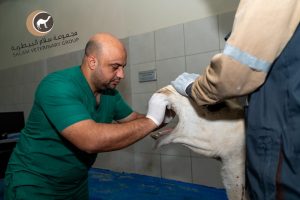
Dr. Waleed Ellawatty is performing lip palpation as part of the examination to detect botox or silicones in the lip of the beauty camel. Photo by SALAM VETERINARY GROUP
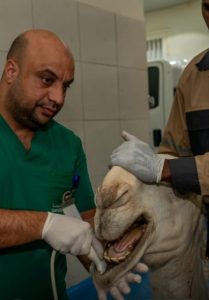
Dr. Waleed Ellawatty is performing an ultrasound of the lips as part of the examination to detect botox or silicones in the lip of the beauty camel. Photo by SALAM VETERINARY GROUP
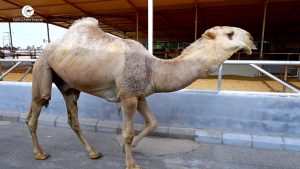
A beauty camel with air injected under the skin in the throat. Photo by SALAM VETERINARY GROUP
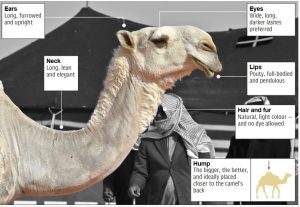
The different parts of the judgement during a beauty contest of the camel. Photo by SALAM VETERINARY GROUP
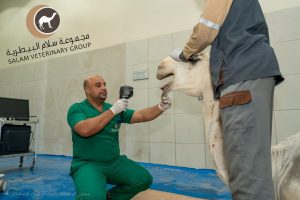
Dr Waleed Ellawatty is performing an infrared camera examination of the lips as part os the examination to detect botox or silicones in the lip of the beauty camel. Photo by SALAM VETERINARY GROUP
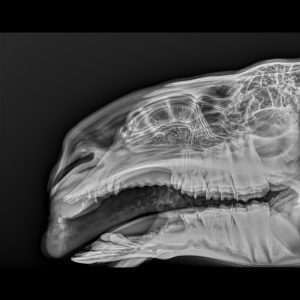
Radiograph of the head of a beauty camel with silicone particles in the upper lip (arrow). Photo by SALAM VETERINARY GROUP
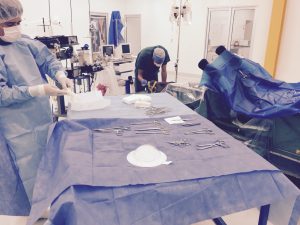
Sterile surgery room set up for the implantation of a silicone device in the scrotum of a cryptorchid horse. Photo by MARGREET VOERMANS
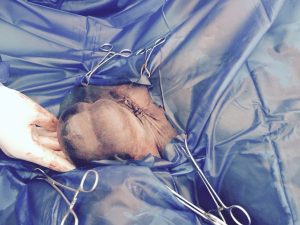
View of an implanted silicone device in the scrotum of a cryptorchid horse. Photo by MARGREET VOERMANS
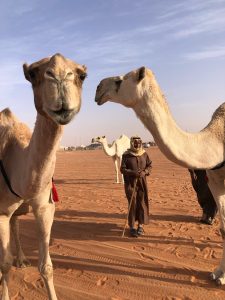
Beauty camels during the King Abdulaziz Camel Festival, Saudi Arabia. Photo by MARGREET VOERMANS
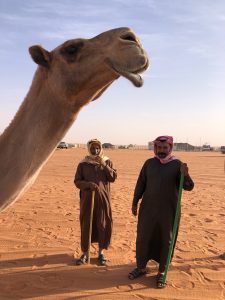
Beauty camel during the King Abdulaziz Camel Festival, Saudi Arabia. Photo by MARGREET VOERMANS
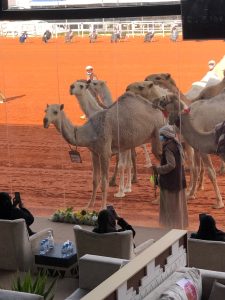
Owners of beauty camels are taking pictures from the VIP salon, while judges are sitting on the opposite side of the show ring. Photo by MARGREET VOERMANS